Two half-acre lots, half a mile apart on the Kihei side of Piilani Highway, can have wildly different luck growing food. One yard is loaded with mango, banana, and avocado, the kind of harvest that ends up in bags on a neighbor's porch every summer. The other planted the same trees three years ago and has almost nothing to show for it, because something ate the seedlings before they had a chance to root. The soil is the same. The rainfall is the same. The difference is whether that particular street sits behind one of the deer fence lines that ranchers, private landowners, and the state have spent the last several years building across the slope between Kula and Kihei's Piilani Highway.
Most descriptions of Maui Meadows lead with the ocean views and the half-acre lots and stop there. What they leave out is that this neighborhood sits inside one of the areas state forestry officials have flagged as having some of the densest axis deer activity on the island, right on the Haleakala slopes above Kihei and Wailea. If you already live here, that fact matters more than another paragraph about privacy and mature landscaping. It shapes what you can grow, when you can grow it, and why some streets look like a farmers market and others don't.
What the ag zoning actually buys you
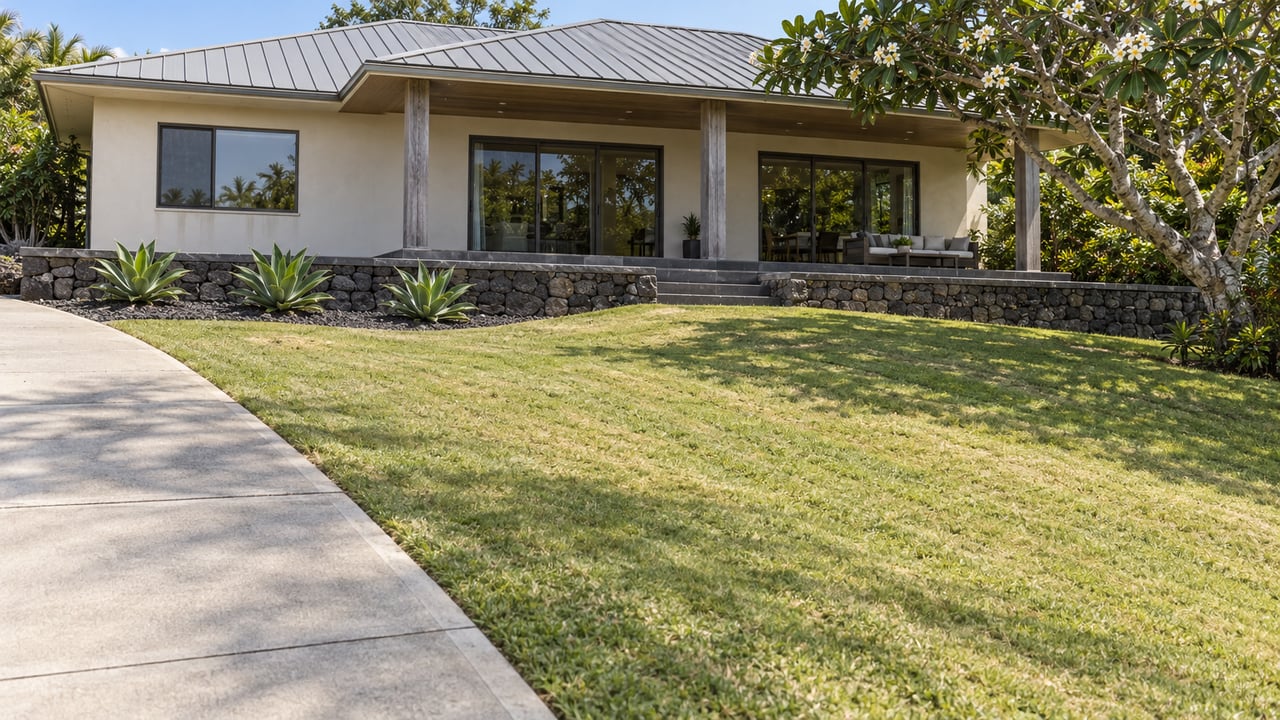
Maui Meadows was carved out of three separate subdivisions in the late 1960s and early 1970s, and it's still zoned agricultural, with half-acre minimum lots. That zoning is the reason the neighborhood looks the way it does: no sidewalks, minimal street lighting, and enough room on most properties for a second cottage under Hawaii's Condominium Property Regime rules. It's also the reason food actually grows here in quantities that would be impossible on a standard quarter-acre subdivision lot.
Longtime residents describe a fairly standard rundown of what a mature Maui Meadows yard produces in a normal year: mango, orange, tangerine, banana, papaya, star fruit, and avocado, often several trees of each bearing at once. A Kihei home gardener who spent nine years growing vegetables on a Maui Meadows lot documented a working annual calendar for the property. Elephant garlic planted in late November or early December comes ready near the end of May. Corn can go in the ground nearly any month. Basil, mint, and rosemary hold through the hot months if they get enough water. It's the kind of planting rhythm that only makes sense on a lot with room to spare and soil that hasn't been compacted by decades of pavement.
None of that is guaranteed, though. It depends entirely on what's eating your seedlings at night.
The 26,000 deer nobody driving past ever sees
The Department of Forestry and Wildlife estimated roughly 26,000 axis deer across Maui Nui in 2025, and the agency ran a fresh tolerance survey through the end of June 2026 to get a clearer read on how the population is affecting communities. Axis deer have no natural predators in Hawaii, and their numbers have grown fast enough that the state has treated them as an emergency for several years running.
Ranchers and forestry officials have described the base of the West Maui mountains above Kealia and Maalaea, and the Haleakala slopes above Kihei and Wailea, as the two areas with the heaviest deer pressure on the island. Maui Meadows sits directly inside the second zone. In response, a coalition of private landowners, ranches, and government agencies has spent several years building four fence lines running mauka to makai between Kula and Kihei's Piilani Highway, each stretching 5 to 7 miles. The goal is to slow the deer from moving between the upcountry grazing land and the lower slopes.
The fences have worked well enough to matter, but not well enough to solve the problem. Ranchers who track the herds say the fencing has pushed more deer into unfenced farm, ranch, and residential land where there's no organized culling. That's the part that lands directly on a Maui Meadows property line. A yard on the wrong side of a gap in the fence system isn't losing seedlings to bad luck. It's losing them to an animal that state biologists are actively trying to manage at the county and legislative level, including a Landowner Incentive Program the state opened in January 2026 that pays landowners up to $50 for each qualifying deer removed from their property.
Why this changes what you plant, not whether you plant
If you're weighing whether to put in a food garden or a new fruit tree, the fence question is more useful than the soil question. A few things worth knowing before you dig:
- Deer most often push through low gaps rather than jumping, so a fence needs to hold at ground level, not just reach a certain height.
- Effective deer fencing on Maui generally needs to run 6 to 8 feet, taller than most decorative property fencing.
- Vegetable beds and young fruit trees are the most vulnerable stage. Mature, established trees tend to fare better once they're past the seedling and sapling years.
- Streets closer to the upper boundary near Ulupalakua Ranch see more pressure than lots further down toward Piilani Highway, though it varies block by block depending on where the fence lines actually run.
None of this means gardening in Maui Meadows is a coin flip. It means the neighborhood's agricultural character, the same trait that gives you room for a mango tree and a second cottage, comes with a wildlife management problem attached that a standard suburban lot never has to think about.
The same openness that grows your garden also grows the dark
The lack of sidewalks and streetlights that makes room for all that planting has a second effect after sunset. With minimal night lighting across most of the neighborhood, Maui Meadows is one of the better spots in South Maui for casual stargazing, no boat charter or Haleakala summit drive required. It's a small thing, but it's the kind of detail that shows up in how residents actually describe their evenings here rather than in a listing description.
It also means the neighborhood runs with less built-in infrastructure than a gated community or a standard HOA subdivision. There's no board collecting dues to fund streetlights or fence maintenance. That gap gets filled, when it gets filled at all, by volunteers.
The volunteer group doing the unglamorous work
The Maui Meadows Neighborhood Association has represented residents since 1999, when it took over from the earlier Maui Meadows Homeowners Association, and the two groups formally merged in 2008. It isn't an HOA with the power to enforce covenants. It's closer to a civic voice, the kind of group that shows up when the county needs to hear from residents directly.
That's exactly what happened this year on a different issue. When Kihei's chronic flooding problems made headlines again after the March 2026 Kona low storms, Les Iczkovitz, who heads the group representing Maui Meadows in South Kihei, was the resident voice quoted pushing county officials to address root causes instead of just patching the same damage repeatedly. It's a reminder that the same civic structure advocating on flooding is the closest thing the neighborhood has to organized action on deer pressure, road conditions, or anything else that falls outside individual property lines.
What this actually means if you already live here
Put it together and the picture of Maui Meadows looks different from the version in most neighborhood guides. The half-acre ag zoning that gives you room for a mango grove and a mother-in-law cottage is the same zoning that puts your yard inside a documented wildlife corridor the state is actively trying to manage with fencing, incentive payments, and annual surveys. The lack of sidewalks and streetlights that makes for good stargazing also means there's no municipal or HOA budget quietly handling the gaps, so a volunteer association ends up carrying that weight instead.
If you're already gardening on a Maui Meadows lot, the practical question worth asking your neighbors isn't just what grows well here. It's whether your street sits behind one of the existing fence lines, and if not, what the neighbors two properties over have actually tried that's held up.
If you're thinking about adding fruit trees, fencing an existing yard, or just want to understand how a specific property here has fared with deer pressure or planting history, Steve Landin has spent enough time in Maui Meadows to talk through it street by street. Reach out anytime you want a local read on a specific lot.
This article is general information, not legal, tax or financial advice. Consult a qualified professional about your situation.